Maps & Virtual Spaces
Chapter 8 summarizes the different ways maps can be used in order to present data. These methods include conceptualizing, showing, analyzing, narrating, interpreting, creating, and employing. According to our textbook, “Mapping tools are an integral part of political and social work with statistical information” (Drucker 130). This idea helps readers get more of a visual image of demographic data in history, culture, and literature. GIS, short for Geographic Information Systems, is a computer based tool that analyzes and stores data. They “were not developed for the humanities, but to map natural and social phenomena” (Drucker 133), meaning they display human interactions.
Chapter 9 gives a wider view about three-dimensional projects in a virtual model. The idea of a 3-D project requires “immersive experience, or, at the very least, the possibility of moving through an on-screen display in real time” (Drucker 155). Creating the virtual design can either depend on the source data or a technique known as procedural modeling. This approach includes instructions for shapes and its “surface rendering of color and texture” (Drucker 157). The process sounds pretty complicated, because you never know if the dimensions on a computer screen are as accurate as they would be in real life.
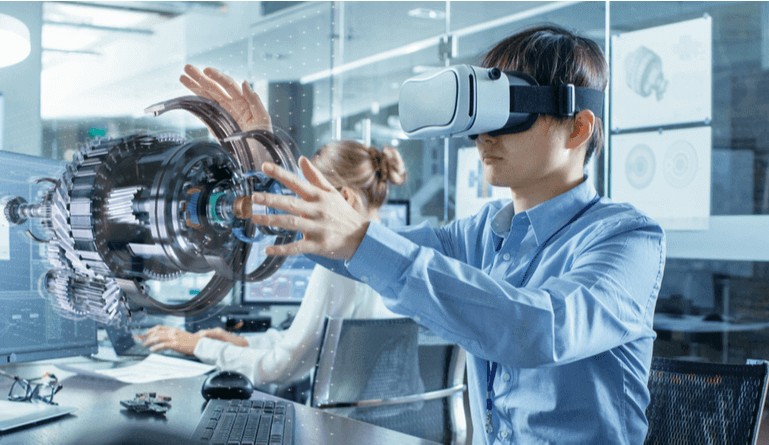
I think that virtual tourism has its pros and cons. People are able to see a desired city without having to leave the comfort of their own home. Most of the time, the setting and visuals of the area are accurate of what it looks like in real life. Virtual tourism is also helpful to those who may not have time to travel or the money for it but still would like to learn more about a place. The cons of this, however, is losing the social aspect of the tour. People are not able to ask questions as easily through a screen as they would in person. With virtual heritage, people are able to embrace different cultures through the works of digital humanities. For example, in the Google Arts & Culture website, I was able to look at collections of artwork from all over the world such as the Eiffel Tower in Paris, France and The Museum of Modern Art (MOMA) in New York. Although for some viewers, looking at artwork on a device might not be as exciting as seeing them in real life.

I agree with you that virtual tourism has its pros and cons. I'd also add that virtual tourism can make viewers desensitized to the beauty of our world and not appreciate it as much as if they actually traveled to the place they are touring online. For example, the Mona Lisa is actually a lot smaller than some people realize and when I saw it for the first (and last) time, I was kind of surprised by it. I feel like people who are virtually touring the Louvre wouldn't get this effect. But I think it is a great way to see the sights without spending all the money on flights and hotels.
ReplyDeleteI agree that it's not the same. I was actually pleasantly surprised, though, by the Mona Lisa! I think I expected to be underwhelmed from what I had heard, but it was actually pretty beautiful. All the people though.... haha
DeleteI enjoyed reading about how GIS integrates with politics in the chapter. well, rather than politics I would say political and societal information. I agree with your claims on virtual tourism. While I think that this new technology is great, I think that it takes away from the experience and the authenticity of traveling. small minded humans don't often journey far, I think traveling widens perspective and allows for us to meet people from across the world, you cannot do that on a screen.
ReplyDelete